 (720) 999-8282


What Is Commercial Roof Replacement and When Is It Necessary?
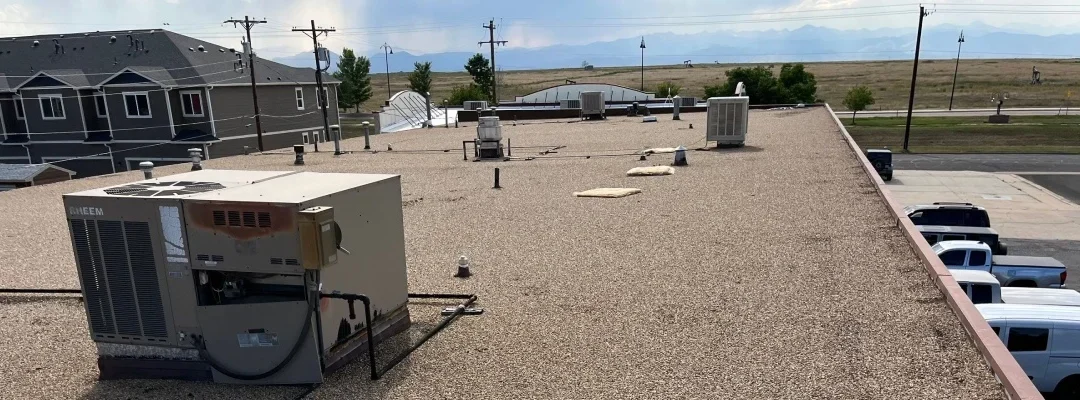
Commercial roof replacement rebuilds the entire low-slope roofing system, including insulation, membrane, flashings, edges, and drainage, to restore long-term watertight performance. It becomes necessary when repairs no longer address recurring leaks, widespread moisture, or failing system components.
Commercial roof replacement is a significant capital project. Done well, it protects operations, tenants, inventory, and equipment for years. Done poorly, it becomes a recurring source of leaks, disruption, and unplanned expense.
This guide explains what “replacement” actually includes, how to recognize when it’s time, which systems are common for low-slope roofs, and how to plan a project that stays predictable and professional from start to finish, especially in Colorado’s demanding climate.
If you manage a property in Westminster or North Metro Denver and want clear answers without pressure, Mile High Roofing Services provides straightforward inspections and documentation so you can make informed decisions.
What Is Commercial Roof Replacement?
Commercial roof replacement typically means removing and rebuilding the roof assembly so it performs as a complete system, not a patchwork of fixes.
Most replacements include:
- Removing existing roof layers as needed (tear-off scope depends on condition)
- Replacing wet or failing insulation
- Installing a new low-slope membrane system (commonly TPO or EPDM)
- Rebuilding critical details such as flashings, terminations, edge metal, and drainage tie-ins
- Providing closeout documentation and warranty information for your records
The specific scope should always be guided by inspection findings, moisture conditions, and how the building operates.
What Makes Commercial Roofing Different from Residential?
Commercial roofs are often low-slope and cover a much larger surface area, with more penetrations and transitions.
Key differences include:
- Low-slope assemblies with layered systems (deck, insulation, membrane, flashings)
- Rooftop equipment (RTUs, vents, conduit) and service traffic
- Drainage design (internal drains, scuppers, crickets, tapered insulation)
- Code and safety requirements for staging, fall protection, and access control
- Occupancy coordination for noise, access points, and business continuity
What a Commercial Roofing System Includes
A roof is only as strong as its details. Even high-quality materials can fail early if edges, penetrations, and drainage are handled poorly.
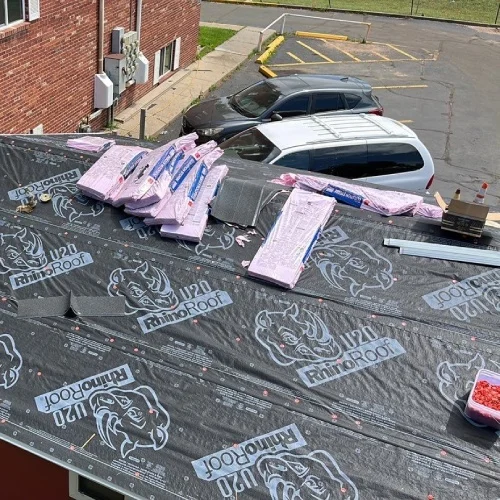
A typical low-slope commercial roof system may include:
- Roof deck: steel, wood, or concrete (may require localized repairs)
- Vapor retarder: used when conditions require it
- Insulation: affects energy performance and stability
- Cover board: adds durability and impact resistance
- Membrane: often TPO or EPDM, selected based on building needs
- Attachment method: mechanically fastened or adhered, depending on design
- Flashings and terminations: walls, parapets, curbs, penetrations
- Edge metal/coping: protects perimeters and reduces wind risk
- Drainage components: drains, scuppers, downspouts, overflow provisions
- Protection in traffic areas: walk pads or pavers where equipment is serviced
When Is It Time to Replace a Commercial Roof?
Most owners prefer to delay replacement—and in many cases, repair or maintenance is the right decision. Replacement becomes more likely when reliability is compromised, and repairs no longer address the root cause.
Common signs replacement may be the right move:
- Leaks keep returning, especially in different areas over time
- Seams, membrane surfaces, or field areas show widespread deterioration
- Wet insulation is confirmed through an appropriate investigation
- Ponding water persists and repeatedly stresses the roof assembly
- Flashings or terminations at edges and penetrations are failing across multiple locations
- The roof is nearing the end of its life based on age, condition, and repair history
A professional inspection should leave you with a clear, documented understanding of what’s happening. Specifically, it should explain what is failing and why, what needs attention now versus what can be monitored, and whether your building is best served by repair, recover (overlay), or full replacement.
Repair vs Recover vs Replace: Choosing the Right Approach
Repair, recover, and replace aren’t interchangeable options; they’re three different strategies, each with its own costs, limits, and long-term risk.
Repair
Best when the roof is still performing, and issues are localized, such as:
- Isolated punctures
- A specific flashing failure
- A limited seam issue
- A drain detail requiring rebuild
Recover (Overlay)
A recover can be a reasonable option when:
- The existing roof is dry and stable
- The assembly is eligible under code and manufacturer requirements
- Drainage and detailing can be improved appropriately
Recover is not a shortcut for failing systems. If insulation is wet or the roof has multiple compromised layers, overlaying can hide problems rather than resolve them.
Replace
Replacement is typically the right choice when:
- Moisture is widespread
- Leaks are recurring and dispersed
- Multiple layers are failing
- Drainage needs correction through design (often tapered insulation)
- You need a long-term solution that can be documented and warrantied
Common Roof Systems for Commercial Replacement in Colorado
Many low-slope commercial roofs in Colorado are replaced with TPO or EPDM systems. The best fit depends less on a single material preference and more on the building’s geometry, traffic patterns, drainage constraints, and performance goals.
TPO (Thermoplastic Polyolefin)
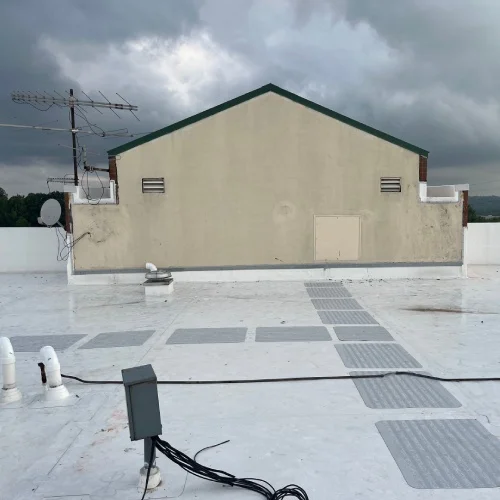
TPO is one of the most common materials used on flat and low-slope commercial roofs today. Many owners choose it because it creates a continuous waterproof surface, and the seams are fused together with heat. When it’s installed correctly, the joints can be very strong. It’s also available in options that can help manage rooftop heat, which may support comfort and cooling efficiency in some buildings. For a general overview of cool roofs, read more from the Department of Energy.
What matters most with TPO isn’t just the material; it’s the workmanship. The long-term performance depends on clean, consistent seam welding, careful detailing around penetrations and roof edges, and added protection in areas where technicians regularly walk to service rooftop equipment.
EPDM (Ethylene Propylene Diene Monomer)
EPDM is a rubber membrane with a long history in commercial roofing. It’s valued for its flexibility, which helps it handle movement and temperature swings without becoming brittle—an important consideration for buildings that experience regular expansion and contraction through the seasons. Many owners also like EPDM because it has a strong track record when it’s properly detailed and maintained.
Like any system, the details determine the outcome. EPDM performance relies on solid seam work and watertight transitions at edges and penetrations, plus practical protection in high-traffic zones to reduce punctures. Good drainage design is also essential. Standing water for extended periods puts unnecessary stress on any low-slope roof system, including EPDM.
Why Drainage and Detailing Matter So Much
In Colorado, weather cycles can be demanding. When water lingers on a low-slope roof, it puts the entire system under more stress—especially with freeze-thaw swings and wind-driven storms. That’s why a replacement plan should do more than put on a new membrane. It should also address how water moves off the roof and how the most vulnerable details are built.
Here’s what drainage-focused planning typically involves:
- Evaluating existing drains, scuppers, and overflow provisions
- Designing tapered insulation where the slope is insufficient
- Adding crickets around curbs and transitions to prevent water traps
- Rebuilding edge details to manage water flow and improve wind resistance
If your roof history includes ponding, replacement planning should address drainage directly, not treat it as an add-on.
What to Expect During a Commercial Roof Inspection
A commercial roof inspection should be structured, documented, and practical.
Typically, it includes:
- A roof walk with photo documentation
- Review of seams, membrane condition, penetrations, edges, and wall transitions
- Drainage evaluation (low points, ponding patterns, drain condition)
- Review of rooftop equipment zones and service paths
When conditions warrant, moisture investigation may be recommended to determine whether insulation is wet and to define a responsible scope.
The outcome should be a clear, usable summary that supports budgeting and decision-making.
Planning a Replacement Without Disrupting Operations
A well-run project protects both the building and the people inside it.
Practical planning steps include:
- Scheduling around tenant hours and operational constraints
- Access control for entrances, loading zones, and rooftop entry points
- Site safety with clearly defined staging and work areas
- Communication cadence for property managers and occupants
- Phasing for larger buildings or multi-building properties
The goal is straightforward: keep the project predictable and keep the building functioning.
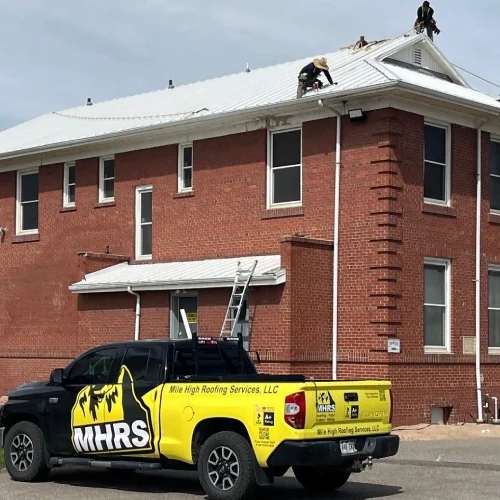
Mile High Roofing Services: Our Commercial Roof Replacement Process
Our team keeps the process clear, documented, and predictable so you understand what’s happening, why it matters, and what the next step should be.
Step 1: Initial Outreach and Project Qualification
After you submit the website form or call, we follow up promptly to confirm your location, building type, the issues you’re seeing, and any operational constraints. If storm damage or an insurance conversation may be relevant, we’ll ask a few practical questions upfront so the inspection is focused.
Step 2: On-Site Inspection and Photo Documentation
We evaluate the roof systematically and document what we find with photos and notes. You should have a clear record of the roof’s condition, not just a verbal assessment.
Step 3: Recommendations in Plain Language
You’ll receive a straightforward explanation of what we’re seeing and what it means for your building, including:
- What’s failing and why
- What is urgent versus what can be monitored
- Whether repair, recover (overlay), or replacement is the most responsible path
If an insurance claim is being considered, we’ll help you understand the roof’s condition first so you’re filing with clarity.
Step 4: Defined Scope and Realistic Scheduling
If replacement is recommended, we provide a well-defined scope that outlines the system approach, insulation strategy (including drainage improvements where needed), critical details, and expected logistics. The goal is to help you plan confidently and communicate clearly with tenants, ownership, or facility stakeholders.
Step 5: Professional Execution and Controlled Jobsite Standards
Commercial roofing work should be run with discipline. We emphasize clean staging, appropriate access controls, daily housekeeping, and consistent communication.
Step 6: Closeout Documentation and Warranty Delivery
At completion, you receive final documentation and warranty information suitable for property records and maintenance planning.
Schedule Your Free Roof Inspection with Mile High Roofing Services.
How Long Does Commercial Roof Replacement Take?
Commercial roof replacement timelines vary by building and scope, but most projects fall into predictable planning ranges once the roof system and logistics are defined.
General planning ranges:
- Small commercial roofs (roughly 5,000–20,000 sq ft): often 3–10 working days on site
- Mid-size roofs (roughly 20,000–60,000 sq ft): often 1–3 weeks on site
- Large roofs or multi-building sites (60,000+ sq ft): often several weeks, frequently completed in phases to reduce disruption
What most influences the timeline:
- Roof size and access limitations
- Tear-off versus overlay eligibility
- Number of penetrations and equipment zones
- Insulation strategy (tapered designs add steps but improve performance)
- Weather conditions and scheduling constraints
- Whether the work is phased to reduce disruption
Actual duration depends on tear-off scope, moisture conditions, access, and weather, so final scheduling should follow inspection and scope approval.
What Drives the Cost of Commercial Roof Replacement?
Cost varies because commercial roofs vary. Two buildings with the same square footage can require very different scopes depending on moisture conditions and detailing complexity.
Common cost drivers include:
- Tear-off requirements and disposal
- Wet insulation and deck repairs
- Insulation thickness and tapered design
- Perimeter edge metal and parapet conditions
- Penetrations, curbs, skylights, and transitions
- Drainage components and overflow provisions
- Access, staging constraints, and safety requirements
- Warranty type and system assembly selections
Warranties and Closeout Documentation
Warranties are only as helpful as the details behind them. A well-run commercial roof replacement should include clear warranty terms and the documentation to support future service, budgeting, and property records.
Warranties typically include:
- Manufacturer coverage
Covers the roofing system materials when the roof is installed according to the manufacturer’s requirements. This often depends on using approved components, following the specified assembly, and meeting installation and inspection standards. - Workmanship coverage
Covers installation-related issues tied to contractor workmanship. This is where accountability for details like seams, flashings, and terminations typically lives.
Closeout documentation you should expect:
- Warranty certificates and any required registration information
- A summary of the installed system (membrane type, insulation approach, key details)
- Photo documentation and/or final walkthrough notes
- Maintenance recommendations (what to check, how often, and what to avoid)
The goal is simple: you should finish the project with a roof you can rely on—and a paper trail that makes future decisions easier.
Storm Damage and Insurance Conversations
After hail or wind events, the best first step is usually a documented inspection that clarifies what damage exists and what your roof needs. That documentation supports decisions, whether you pursue repair, replacement, or an insurance conversation.
A reputable contractor stays focused on accuracy: clear photos, clear explanations, and a scope that fits the roof’s condition without pressure or exaggerated claims.
How to Choose a Commercial Roofing Contractor in Westminster, CO
A commercial roof replacement should feel predictable, not chaotic. Look for:
- Clear inspection documentation and communication
- Experience with low-slope systems and Colorado weather
- Well-defined scopes and transparent expectations
- Strong detail work (edges, penetrations, drainage)
- Safety planning and site controls
- Warranty clarity and service responsiveness
Choose Mile High Roofing Services for your Commercial Roof Replacement
If you manage a commercial property in Westminster, CO or North Metro Denver and need clarity on your roof’s condition, Mile High Roofing Services can provide a documented inspection and a straightforward recommendation.
Schedule Your Free Roof Inspection
FAQs About Commercial Roof Replacement
How do I know if my roof needs replacement or just repair?
Commercial roof repair is typically sufficient when the problem is localized (for example, a single flashing detail, a small puncture area, or limited seam issues) and the roof system is still performing. Commercial roof replacement is usually the better option when leaks recur in multiple areas, insulation is wet, or failures are widespread across seams, flashings, edges, or transitions.
Can my business stay open during a roof replacement?
In most cases, yes—businesses can remain open during commercial roof replacement. Disruption is usually managed through scheduling, controlled access points, clear communication, and jobsite standards that account for tenants, customers, and building operations.
Is a recover (overlay) a good option?
A commercial roof recover (overlay) can be a good option when the existing roof is dry, stable, and eligible under code and manufacturer requirements. It is generally not recommended when insulation is wet, the roof has multiple failing layers, or drainage and critical details cannot be corrected as part of the overlay.
What is the difference between TPO and EPDM?
TPO and EPDM are both common single-ply membranes used on low-slope commercial roofs. TPO uses heat-welded seams, while EPDM is a rubber membrane with different seam and detailing methods. The best choice depends on roof geometry, rooftop foot traffic, drainage conditions, penetrations, and the overall system design, not just the membrane type.
How important is drainage?
Drainage is extremely important on a commercial roof because standing water increases wear and raises leak risk over time. In Colorado, freeze-thaw cycles and wind-driven weather make drainage design and detailing at edges, penetrations, and transitions especially critical for long-term performance.
What should I expect after the project is complete?
After commercial roof replacement, you should receive closeout documentation and warranty information for your property records. This typically includes warranty certificates, a summary of the installed system, and maintenance guidance to support long-term roof performance.